“Software is” is the correct phrase in English. The word “software” is an uncountable noun, just like “information” or “furniture,” and always pairs with a singular verb. Write “The software is running,” not “The software are running.” The only time “are” can appear near “software” is when the verb agrees with a different subject. For example: “What kind of software are you using?” Here, “are” pairs with “you,” not with “software.”
Software is or software are, which one is right?
This question trips up many writers, especially those whose first language is not English. If you have paused on this while writing a report, an email, or a tech document, you are not alone.
The answer is straightforward. “Software is” is always correct in standard English when software is the subject of your sentence. This article covers the grammar rule in plain language, shows real examples, and explains the one exception worth knowing.
“Software Is” or “Software Are”: The Short Answer
“Software is” is always correct when “software” is the subject of the sentence.
This is a firm grammar rule. “Software” is a non-count noun in English, so it takes a singular verb. Think of it the same way you would think of the word “information” or the word “furniture.” You would not say “The information are clear.” You say “The information is clear.” The same rule applies to software.
“Software is correct” is the form you want in almost every sentence you write.
Why Does “Software” Take a Singular Verb?
“Software” is a mass noun. A mass noun is a type of uncountable noun. It refers to something that cannot be counted one by one, the way you count books or chairs.
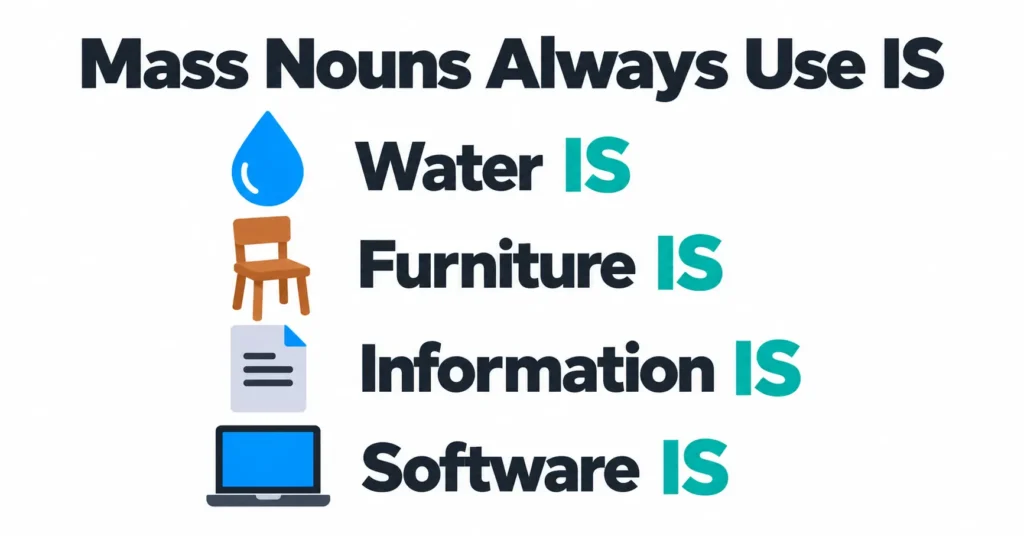
Think about words like water, advice, and furniture. You cannot say “one water, two waters” in the same way you say “one book, two books.” Software works the same way. It refers to a whole category of programs, not separate, countable items.
Because “software” is an uncountable noun, it always pairs with a singular verb such as “is,” “was,” or “has.” This is true whether you are writing about one program or a hundred programs. The word itself does not change.
Here is a simple way to remember the rule. All words that end in “-ware” are uncountable in English. Silverware is uncountable. Hardware is uncountable. Firmware is uncountable. Software is uncountable. They all follow the same pattern.
This rule is at the heart of subject-verb agreement, which means your verb must match your subject in number. Since “software” is always treated as singular, the verb that follows it must also be singular.
Correct and Incorrect Examples
The best way to lock in this rule is to see it applied to real sentences. The table below shows the correct and incorrect forms of “software is” and “software are” side by side.
| Correct | Incorrect |
| The software is easy to use. | The software are easy to use. |
| All the software is installed. | All the software are installed. |
| This software is compatible with iOS. | This software are compatible with iOS. |
| Our accounting software is outdated. | Our accounting software are outdated. |
| The security software is updating now. | The security software are updating now. |
In every case above, “software” is the subject of the sentence. That means the verb must be “is,” never “are.”
Major style guides agree on this. The AP Stylebook, one of the most trusted writing guides used by journalists and writing professionals across industries, treats “software” as singular. The Microsoft Writing Style Guide, a go-to resource for technical writers and developers, follows the same rule. Merriam-Webster lists “software” with no plural form at all.
If you want to get a stronger feel for general rules for is vs. are beyond just this word, that guide covers the full picture of subject-verb agreement in the present tense.
When Can “Are” Appear in a Sentence with “Software”?
“Are” can appear in the same sentence as “software,” but only when “are” agrees with a different subject, not with “software” itself.
Look at these three examples.
“What kind of software are you using?” Here, “are” agrees with “you,” not with “software.”
“These are the software applications we rely on.” Here, “are” agrees with “these,” not with “software.”
“All copies of my software are backed up.” Here, “are” agrees with “copies,” not with “software.”
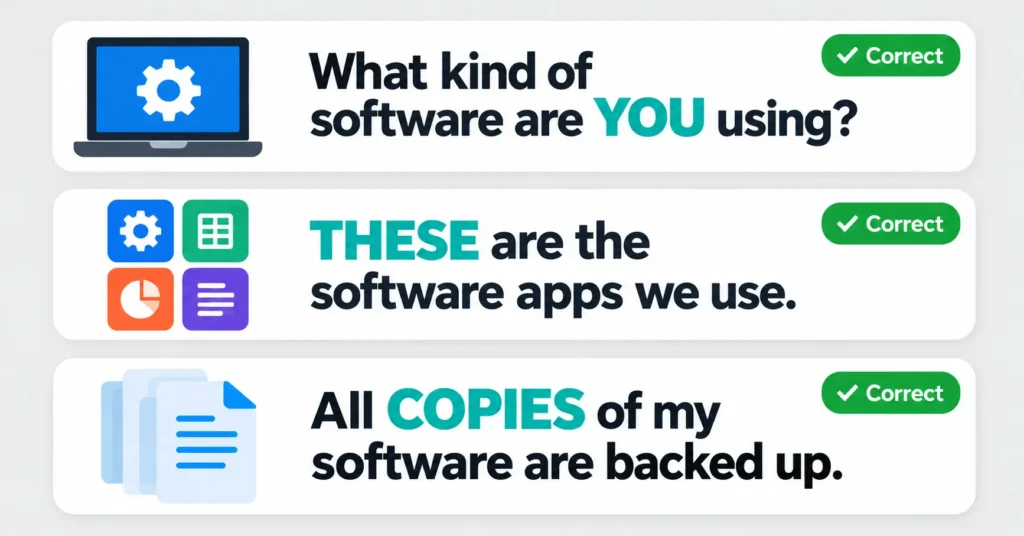
In each case, “software” is not the grammatical subject. The verb “are” is agreeing with a different word in the sentence.
A quick test: find the real subject before you pick “is” or “are.” If “software” is the subject, use “is.” If something else is the subject, that word controls the verb choice.
This is worth knowing because “the software is correct or are” is a question many writers ask when they see “are” near “software” in a sentence they did not write. The answer is that both can exist in the same sentence without breaking any grammar rule, as long as “are” is tied to the right subject.
This pattern is quite different from how collective nouns interact with verb agreement, where the subject itself can sometimes shift between singular and plural depending on the meaning you want to express.
How to Talk About Multiple Software Programs
Because “software” is a mass noun, you cannot make it plural by adding an “s.” “Softwares” is not used in standard English. Merriam-Webster does not list it as a valid word form.
When you need to refer to more than one program, use one of these phrases.
- software programs
- software applications
- pieces of software
- types of software
- software solutions
For example: “We tested five software programs during the review.” That is clean, grammatically correct, and easy to read.
The question of “is software singular or plural” often comes up together with this point. The short answer is that software is always singular in form, even when it refers to many programs at once.
You might also find this pattern familiar if you have read about other mass nouns like news, which also stays singular no matter how many news stories are being discussed. The same logic applies to software, data, and information across technical writing.
Quick Grammar Check: Software Is or Are?
Try these four sentences. Pick “is” or “are” for each blank.
- The new antivirus ____ available for download. (Answer: is)
- Our project management ____ running well this month. (Answer: is)
- What kind of ____ are you using for this task? (The word is “software,” and “are” agrees with “you”)
- All three software programs ____ now compatible. (Answer: are, because “are” agrees with “programs”)
If you answered all four correctly, you have a solid grip on this grammar rule in practice.
Frequently Asked Questions
Is “software is” or “software are” correct?
“Software is” is always correct when “software” is the subject of the sentence. “Software” is an uncountable noun and takes a singular verb in all standard English, including both American and British writing.
Why is “software” treated as a singular noun?
“Software” is a mass noun. It refers to a general category of programs, not individual countable items. Like “information,” “advice,” or “furniture,” it cannot be pluralized and always uses a singular verb form, such as “is,” “was,” or “has.”
Can I ever use “software are” in a sentence?
Yes, but only when “software” is not the grammatical subject. “What kind of software are you using?” is correct because “are” agrees with “you,” not “software.” When “software” is the subject, always use “is.”
Is it correct to say “all the software are installed”?
No. “All the software is installed” is correct. Even when referring to many programs at once, “software” stays singular. If you want to name the programs clearly, say: “All the software programs are installed.” Now “are” agrees with “programs,” not with “software.”
What is the plural of software?
The plural of “software” is just “software.” The word does not change form. “Softwares” is not recognized in standard English. To describe multiple programs, use phrases like “software applications” or “software programs.”
Does “software” use “is” or “are” in British English?
“Software is” is correct in both British and American English. Unlike some collective nouns, such as “team” or “committee,” which can take “are” in British English to reflect the individual members, “software” is a mass noun and follows the singular verb rule in both varieties.
Verb agreement errors like “software are” are easy to miss when you are writing fast, especially in long technical documents or business emails. CorrectEnglish catches subject-verb agreement errors in real time as you type, so you can fix them before anyone else reads your work. Give it a try and write with more confidence from the first word.